This Content is Sponsored by

For as long as I can remember, I’ve always wanted to be a brewer. In the 1980s and ’90s, my dad, a restaurant general manager, introduced our town to the then-novel concept of craft beer or microbrews from brewers like Sam Adams, Sierra Nevada, Abita, and more. Growing up in this environment naturally cultivated my appreciation for quality beer.
In college, I dabbled in homebrewing, but my real journey began a couple of years ago. I invested in the top-notch Spike Trio Brewing System for its professional brewery feel in my space. Simultaneously, I enrolled in an accredited program with Virginia Tech and the University of Richmond for a Professional Brewer’s Certificate. I believe hands-on experience is the best way to learn about brewing and starting a brewery. Cheers to Spike for making Brew Day accessible to anyone willing to put their heart into this hobby.

The Legacy: Mishicott Brewing
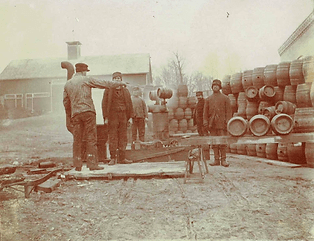
Mishicott Brewing was the name of my family’s brewing company located in Mishicot, Wisconsin which operated at its peak prior to the onset of Prohibition in the United States. Unfortunately, prohibition meant that the brewery would close never to re-open. It is my ambition to finish what was started. Another reason for choosing Spike was that their equipment is engineered and assembled in Wisconsin.
In the early 1900’s, the other side of my family owned and operated an icehouse in St. Louis Missouri, and delivered ice to a young company at the time known as Anheuser-Busch. We all know beer has to be kept cold. With a family legacy like this, I like to think golden ale runs through my veins, especially on Brew Day!
Want to hear more about Christian’s homebrewing journey? The How’s, Why’s and What he plans to do next is all on Episode 101 on Double Hopbeat Podcast.
The Beer: IPA
One of my favorite things about winter seasonal beer is the variety of base styles brewed to create them. The BJCP defines a holiday ale as one that suggests the oncoming of colder weather, has a rich body and warming finish, generally medium amber to very dark brown, and with aromatics hinting at Christmas cookies, gingerbread, or evergreen trees.
The recipe outlined here is my take on a classic holiday beer: an IPA that does not incorporate any spices but instead uses roasted malts and classic American hops to create a profile with a warming finish and evergreen-like hop aromas.
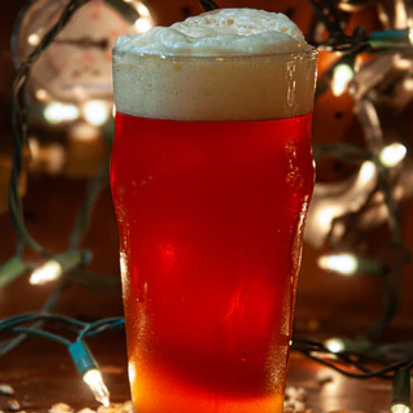
The Recipe: Tannenbaum
INGREDIENTS
GRAIN
- 11 lbs Pale Malt (2 Row)
- 2.5 lbs Crystal 60L
- 0.5 lbs Dextrine Malt
HOPS
- Boil hops: 0.5 oz Cascade – 0:60 min
- Boil hops: 0.5 oz Centennial – 0:60 min
- Boil hops: 0.75 oz Cascade – 0:15 min
- Boil hops: 0.75 oz Centennial – 0:15 min
- Boil hops: 1 oz Cascade – 0:00 min (flame out)
- Boil hops: 1 oz Centennial – 0:00 min (flame out)
- Dry hops: 5 oz Cascade – 3 days
- Dry hops: 5 oz Centennial – 3 days
YEAST
- American Ale (Wyeast Labs 1056)
INSTRUCTIONS
BATCH SIZE: 5 gal
OG: 1.080
FG: 1.024
IBU: 59
ABV: 7.5%
EFFICIENCY: 80%
MASH TEMP: 152ºF
BOIL: 60 min
FERMENTATION:
68ºF – 7 days
SYSTEM: Spike Trio
Pro Tips
- Although I did not for this brew, many brewers integrate spices in their winter seasonal recipe and add them at different stages during the brewing process. A few of the most common ingredients for holiday spiced beers include cinnamon, ginger, nutmeg, cloves, and orange peel. If you enjoy your winter ale with hints of classic spices associated with the holiday season, then use your creative freedom as a brewer to spruce up this beer with one or a combination of these holiday-inspired adjuncts. There are plenty of other spices that you could use, so try your favorite!
- When it comes to spiced beer, it is easier to overdo it than to underdo it. For a five-gallon batch, try starting with 1/8 to ¼ teaspoon per spice. When using spices in your home-brew, it’s best to start small, build a well-balanced profile that you like, and tweak your recipe from there.
- Spices can be added at any point throughout the brewing process (i.e., mash, boil, ferment), but I recommend adding them either while whirlpooling or after fermentation since boiling spices might inflict some astringent or overpowering flavors and aromatics. If adding spices during fermentation, immerse your spices in a high-proof spirit with enough to cover them, leave them in this solution for 4 to 6 days, and add to your fermenter 3 to 4 days prior to packaging.
Cheers
Christian Muckerman – Mishicott Brewing
Advertisements
Discover more from MASHOUT MAGAZINE
Subscribe to get the latest posts sent to your email.
