
There was never a single, deliberate plan behind this beer. Instead, it came together through a series of small, sporadic thoughts. I was sitting at my desk scrolling through Instagram when I came across a photo of a beer packaged in a 500 ml bottle. That image alone sparked the question of what kind of beer I would want to put into a bottle like that. Something outside the usual territory of a saison, a stout, or a mixed fermentation beer… At least not yet.
That thought led to the idea of a farmhouse ale, which slowly shifted into a farmhouse lager. From there it became low ABV, then no boil, then the use of aged hops, and finally the idea of fermenting a lager yeast warm. A few days earlier, I had also come across a post discussing fonio, a historic African grain. When building the recipe for what would become Terra Crua, or Raw Earth, I decided to incorporate a small percentage of fonio into the grist.
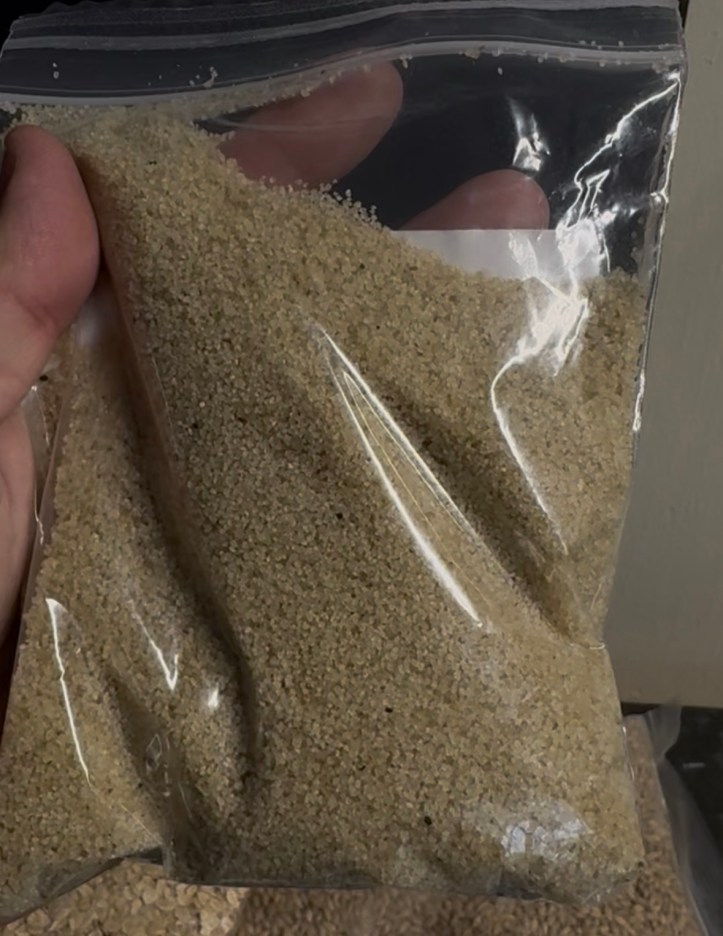
The grain bill itself is intentionally simple.
It consists of
55.4% MCM Pilsner malt
19.8% MCM Vienna malt
9.9% flaked barley
9.9% spelt malt
5% fonio
While fonio can be cereal mashed, it does not strictly require it, though I chose to do so here after some helpful guidance.
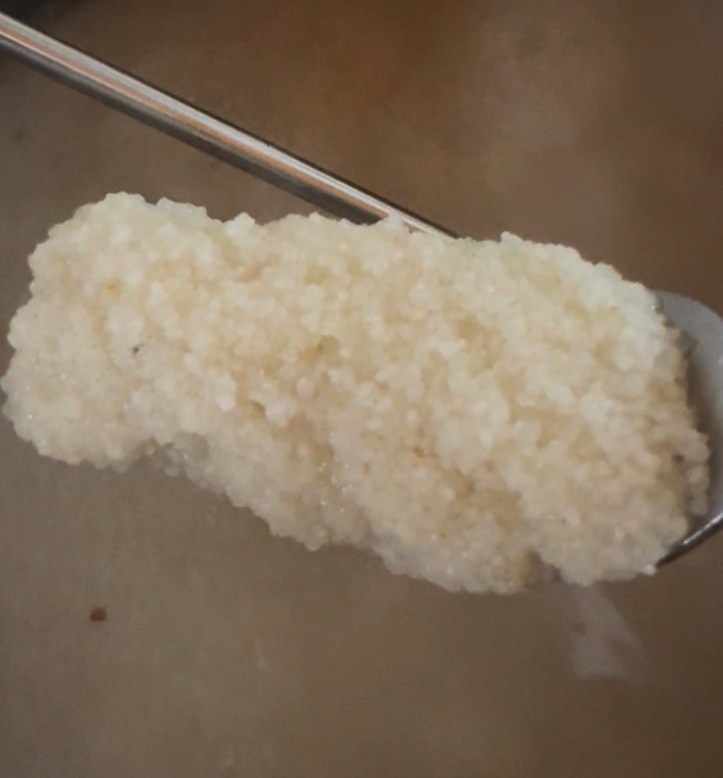
The recipe was built around a target brewhouse efficiency of 72 percent, though the final wort came in five gravity points higher than expected. To streamline the brew day, a single infusion no sparge mash was conducted at 149°F for 60 minutes. As the wort was transferred to the kettle, hops were added at first wort. Since no traditional boil was planned, this was done to maximize hop contact and extraction.
Hopping was kept intentionally low, with bitterness estimated at roughly 5 IBUs, though it is unclear how accurately Brewfather models bitterness in a no boil process. The hop bill consisted of 1 ounce of aged lambic hops added at first wort, along with approximately 0.75 to 1 ounce of German Saaz.
Instead of boiling, the wort was raised to 195°F and held there for 20 minutes before being chilled as quickly as possible down to 57°F. Yeast was pitched at that temperature and allowed to free rise to 60°F. Fermentation was carried out using CellarScience German lager yeast, with the goal of keeping fermentation character clean while allowing the raw process and ingredients to speak for themselves.
There are a few key considerations worth noting going into this brew. Brewing without a boil while using Pilsner malt immediately raises questions around DMS. Will it be present at all? If it is, will it meaningfully affect the beer, or overwhelm it? And more broadly, was choosing this process a sound idea to begin with, or an unnecessary risk in pursuit of something different?
Bitterness is another variable. With a deliberately low IBU target and the use of aged lambic hops, and a small addition of Saaz, bitterness is expected to be restrained, if present at all. Rather than contributing sharp hop character, these hops may lend a soft, earthy background note, subtle herbal tones, or simply serve to balance the beer without drawing attention to themselves. How much influence they will have in a no-boil process remains to be seen.
The expected flavor profile is equally uncertain. Will the beer finish dry and crisp, or will the absence of a traditional boil leave it softer and fuller than intended? How much character will the grain bill contribute, and will the small addition of fonio introduce a quiet rustic quality or fade into the background? These unknowns are part of the appeal. This beer is as much an experiment as it is a finished product, and its outcome will help inform future approaches to raw and low-intervention brewing.
From a technical standpoint, this beer is designed to remain simple and restrained. Original gravity is targeted at approximately 1.035 to yield a final alcohol content near 3.5 percent ABV. The grist is built primarily on Pilsner malt with a small percentage of fonio and other grain added for texture and rustic character. Hop additions are limited to aged lambic hops and a small portion of Saaz, contributing an estimated 2-5 IBUs. Fermentation is conducted cool with a clean lager strain to preserve malt expression while allowing the raw process and low hopping rate to define the beer’s character.
This article will continue to be updated as the beer moves through each stage of its life. Observations and tasting notes will be added from early fermentation samples through conditioning and into the final finished beer. As Terra Crua develops, this space will serve as a record of how process, ingredients, and time shape the beer.
By Jordan V, Billy’s Tavern Homebrewing
Jordan is a California native. When he is not brewing he can be found drinking beer with friends, duck hunting, and getting lost in a good book or video game. When he is not out on an adventure with his wife, he can be found at home with his two lovable dogs. Stay up to date by following him on Instagram.
Check out some more great content!

Crafting an Organic American Lager: A Sustainable Approach That Paid Off with Billy’s Tavern
As someone who is pretty much lager-focused in my brewing, I don’t usually spend much time thinking about American Lagers. That changed after a trip to San Diego. I tried the Kernza Lager from Pure Project and walked away wanting to brew my own take on a sustainable lager built around organic ingredients. Kernza is…

Brew a Heavily Saturated Hazy IPA with Mishicott Brewing
There is always a special kind of beauty in brewing a big hoppy IPA at home. It is the fun of building a recipe that pushes flavor to its limit and the satisfaction of watching it come together in the glass. Pheonix is one of those beers that reminds you why the process matters. It…

From Field to Fermentor: Believing in American Malt
For a long time, homebrewers have been told that imported malt is the gold standard. If it’s not from Germany or the U.K., it’s not the “real thing.” You hear people say they only use Weyermann for lagers or Crisp for English ales. Those are great malts, no doubt, but it’s time we start giving…

Discover more from MASHOUT MAGAZINE
Subscribe to get the latest posts sent to your email.
