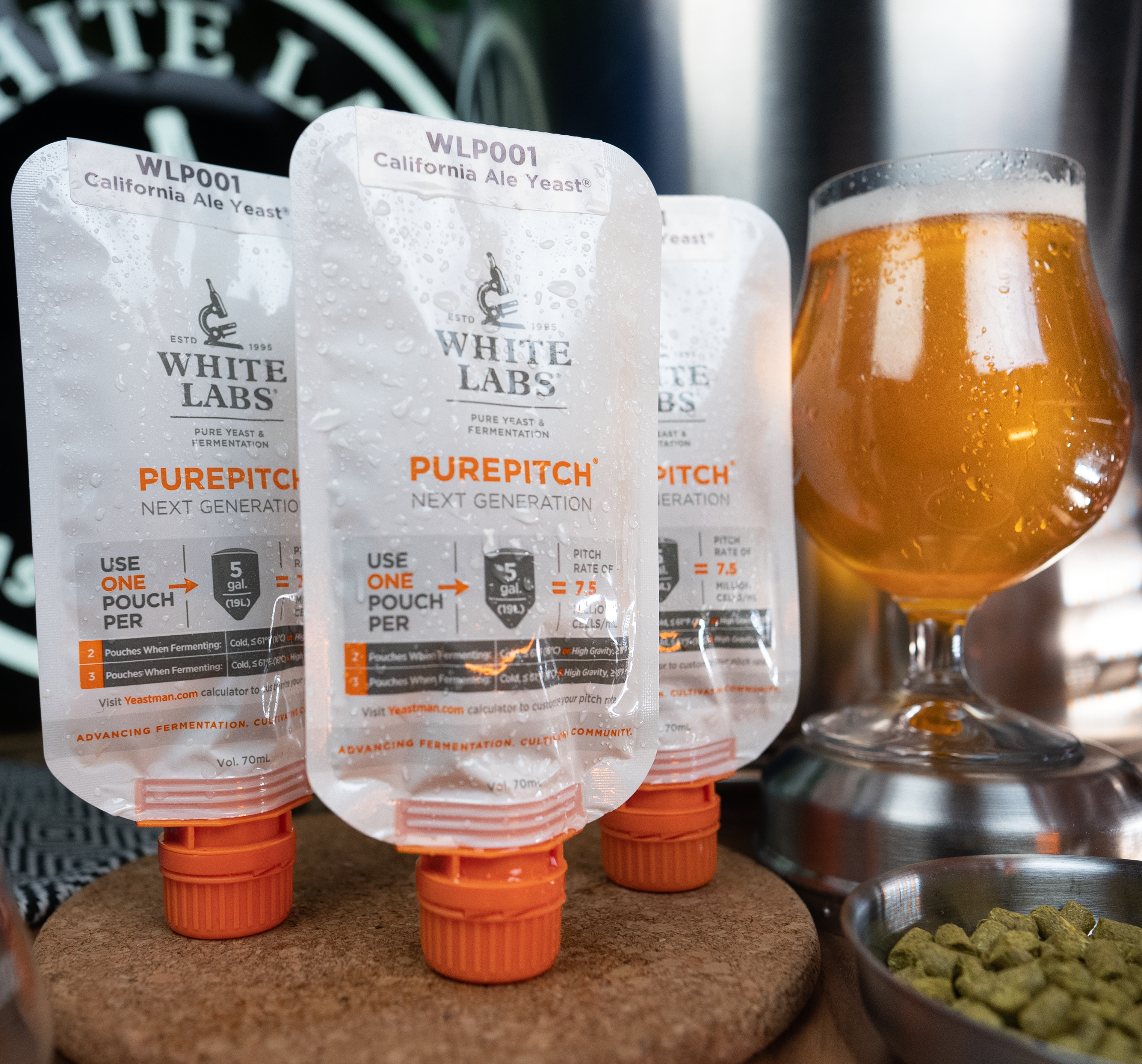
Yeast. One of the four core ingredients that make beer. You’ve probably heard phrases like “No Malt, No Beer” or “No Hops, No Beer.” But here’s the truth: without yeast, you don’t have beer either – you just have sweet, unfermented wort. It’s yeast that transforms that sugary liquid into the crisp, flavorful beverage we all know and love.
Today’s brewers have it pretty easy when it comes to yeast. There are a staggering number of strains to choose from, each with its own unique characteristics and flavor profiles. It’s almost like a world of endless possibilities! But that freedom can also create a lot of questions, especially when you’re putting together a new recipe. Do I go for dry yeast or liquid yeast? Should I invest the time in making a yeast starter? And how do I know which strain will give me the results I’m after?
With so many options, I often find myself reaching out to yeast suppliers, tapping into their deep knowledge about the strains they offer. After all, they’re the experts when it comes to fermentation magic.
Recently, I had the chance to chat with the incredible team over at White Labs, one of the leading names in the industry. I got to ask them some in-depth questions about their process, the work they put into growing the industry, and the evolution of the yeast industry as a whole. It’s truly eye-opening to see the dedication and science behind each batch of yeast – from strain selection to quality control. And as the craft beer scene continues to grow, the role of yeast in shaping flavor and aroma has never been more important.
It’s clear that yeast isn’t just an ingredient; it’s a powerful force in the brewing process, and understanding it can really take your brewing game to the next level.

What quality control measures do you have in place to ensure consistency across yeast batches?
21-Day Propagation 
Over the decades of our research and development, we have optimized our propagation process, resulting in yeast big plump cells full of nutrients and healthy cell membranes great for sustained viability and reuse.
FlexCell Technology
Our patented FlexCell process grows yeast with minimal exposure to the environment, ensuring quality and purity in every package. The improved proprietary packaging material allows for one-way off-gassing to reduce product inflation and deliver better yeast health and longer shelf life.
Quality Control with over 38 Quality Checkpoints
We pride ourselves in verified quality control testing, including standard industry-wide microbiological testing (selective media plating) AND proprietary qPCR methods (developed with Invisible Sentinel) for the most sensitive limit of detection.
2.What are the best practices for homebrewers to maintain yeast viability during storage and pitching?
The best practice for homebrewers to ensure a successful fermentation is to repitch as soon as possible. Treat the stored yeast like a finished beer, devoid of oxygen ingress, and kept cold. Viability can be very strain-dependent, some strains only survive a short amount of time while others thrive, so use it as soon as possible or within a week or do a microscopic viability and cell count. You can also make a starter for newly grown yeast.
3. How would you recommend troubleshooting common fermentation issues, such as stalled fermentation or off-flavors?
Fermentation issues are best caught as soon as possible. Track your daily pH and gravity levels. A drop in pH levels is a great way to indicate fermentation has started compared to a visual inspection. Proper pitch rates are important for fermentation timelines and flavor and aroma development. A great starting point is the industry recommendation, 1 million cells/mL/P for Ales, and 1.5 million cells/mL/P for Lagers. Underpitching with higher temps can lead to more esters while overpitching can lead to yeast cells fighting for sugar & resources while muting some of their yeast characteristics.
4. How many generations of yeast harvesting and repitching would you consider safe for homebrewers?
Proper harvesting/repitching depends on timing as well as proper cleanliness. A microscope can be a quick way to determine the health of the yeast, provide a standardized pitch rate, and sometimes determine contamination. Monitor your previous brews of the yeast to help determine the fitness of the strain. With proper checks, some ale strains can go up to 8-10 generations.
5. How does yeast selection influence ester and phenol production, and what strains would you recommend for brewers seeking fruity or spicy profiles?
Yeast can play a crucial role in a beer’s overall flavor and aroma, as well as its mouthfeel and attenuation. Fine-tuning of esters can be played with as a brewer with adjusting fermentation temperature and pitch rate. For phenol production, it depends on the grain bill as well as the strain. For a fun experiment, try using a Saison strain (WLP565, 566, 590) and pitch one at a low temperature versus a high temperature. Or under-pitch one while the other gets a normal ale pitch rate (1 million cells/mL/P)
Check out their yeast bank for all the brewing opportunities
6. Do you offer partnerships or collaborations with homebrew clubs?
One of the best ways to stay connected with White Labs is our Exclusive & FREE society, White Labs Fermentation Society. By joining the society, you will get notified of first-look at exclusive unique strain drops with fun swag, label redemptions for Fermentation Society Gear, as well as a quarterly newsletter featuring:
• Member Feature: A chance for YOU to share your passion with other fermentation enthusiasts
• Retailer Spotlight: Shoutouts to the businesses that keep our homes stocked with all the ingredients and supplies we need
• Brewer Blurb: Hear from the brewers of White Labs Brewing Co on their experiences with the exclusive strain releases as they reveal tips & tricks and what they thought set this strain apart from the rest!
• R&D Kitchen: Don’t forget we have two brew pubs serving a variety of delicious fermented foods. Check out this feature on the latest from our R&D kitchen along with recipes and how-tos.

7. What sustainable practices do you follow in the cultivation and distribution of your yeast?
White Labs is demonstrating our commitment to sustainability by reducing water, electricity, and cleaners used to sanitize traditional propagation vessels during the transfer process and reducing our overall use of rigid plastic packaging material. The PurePitch® package is more recyclable and more breathable, reducing the chance of gas buildup and maintaining a favorable environment for the yeast. The FlexCell™ process and PurePitch® package deliver the purity and high-quality yeast that you expect from White Labs.
“The PurePitch® package is more recyclable and more breathable, reducing the chance of gas buildup and maintaining a favorable environment for the yeast.”

Learn more about White Labs and who they are here.
The Mashout Magazine wants to thank White Labs for partnering with us to not only be able to share information like this, content including recipes and experimentsaround their strains, but to also offer homebrewers 5% off homebrew pouches from them directly. You can use code “MashMag” for 5% off your order all year long!
Shop strains here

We are also giving away free yeast each month all year long! Head over to the our giveaway page for more information.
By Jordan Vaughn, Billy’s Tavern Homebrewing
Jordan is a California native. When he is not brewing he can be found drinking beer with friends, duck hunting, and getting lost in a good book or video game. When he is not out on an adventure with his wife, he can be found at home with his two lovable dogs. Stay up to date by following him on Instagram.
Leave a Reply