
For the past year and a half I have been fascinated with brewing lager beer. I brewed my first Helles and submitted it on a whim to a competition, and it managed to score a 34. Taking the judges feedback into consideration, I tried again and managed to snag three first places.
In the beginning my recipes used melanoidin malt, but always on the search to improve my lagers I decided to try decoction mashing, and instantly fell in love. After reading Jack Hendler & Joe Connolly’s book, Modern Lager Beer – which I think everyone should read – it made me want to was focus more on brewing lager beers.
Lately I have been playing around with under modified malt. Montana Craft Malt has a heritage Steffi malt that has quickly become my go-to base for lagers. What I love about it is that it really invites you to step back into tradition. To get the most out of it you cannot just rush through a single infusion mash. It rewards a decoction mash, and that is where the magic happens.
Decoction is not just about following some old world ritual for the sake of nostalgia. It is about unlocking flavor, depth, and texture that you don’t find in today’s highly modified malts. When I pull that thick portion of the mash, boil it, and stir it back in, I feel like I am connecting directly with the roots of brewing. The results show up in the glass with a richer malt character, smoother body, and a layered complexity that makes you stop mid sip and really notice the beer. I don’t believe that decoction is extra work. It is extra care. When I am brewing with a malt like Steffi, it feels less like a chore and more like giving the beer the respect it deserves.
You often hear that doing a decoction is pointless or a waste of time, but I refuse to believe that melanoidin can create the same flavor of a decoction mash. Could I tell the difference between the two? Maybe, maybe not, but it does not take away from the importance of a decoction mash.
I was able to talk to Nick Pavlina, the Co-Owner and Brewer for Humble Sea Brewing in Santa Cruz, California. In our conversation, we discussed decoction mashing and why he does it. Would you be able to tell the difference? Between one beer with a decoction mash, and one cheapened by melanoidin malt? “I believe I could, I’ve had several lagers over the years using melanoidin and I think it’s pretty easy to spot them, they give an unpleasant caramel flavor to me.” Hearing this, I thought of what Jack Hendler of Jack’s Abby had said about melanoidin malt. It is not commonly used for lagers in Germany and Czechia, and it is not a 1 for 1 sub for decoction. He states that, “German beers don’t use it because it reduces fermentability and creates sweet, arguably cloying flavors, where decoction is generally used for creating highly attenuation beers.”
The decoction process is more impactful on how the actual enzymatic activity of the mash affects wort than fermentation. If people can’t taste the difference, why do we do a decoction mash? Nick’s response was perfect. Something that so many homebrewers don’t think about when talking about decoctions. “To me, the quality and sophistication of the wort from a decoction mash is unmatched. It goes through several enzyme ranges and extracts all kinds of nuances along the way. This cannot be replicated by single infusion, nor melanoidin. Not to mention the subtle nuanced maillard flavors you get.”
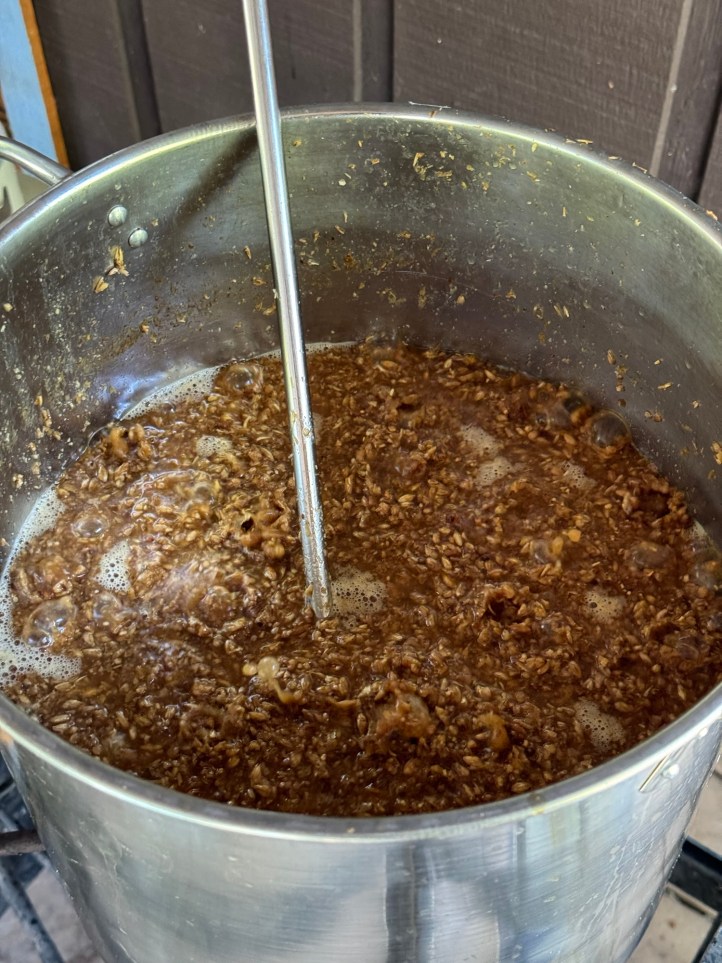
Humble Sea has always been one of my favorites. I remember trying Socks and Sandals with my buddy back when we had our beer podcast, and more recently enjoying their Helles with my wife in Pacifica. It is always a treat to drink a beer brewed by people who care about tradition and quality in a lager, not just because a brewery felt they needed one on tap.

How did Humble Sea get their inspiration and their approach to decoction brewing instead of a more modern infusion mash? It stems back to Nick’s days as a homebrewer. “Pretty much all I made were German Lagers and English Pale Ales, and German Pale Lager has always been an inspiration for me. Bierstadt in Denver was an early inspiration. Back when they opened, I didn’t know of any other breweries doing decoction mashing.” He also mentions that when Humble Sea first opened, their system was not set up to decoction mash, but that soon changed once he flew out to Denver to sit in on a brew day with Ashleigh at Bierstadt. He returned home, and changed up their brewhouse to do decoction mashing going forward. They might have been the only brewery in California doing decoction mashing at the time.
Fun fact! Humble Sea uses steam kettles. They are more gentle than direct fire, which makes it so they are able to boil their decoctions a bit longer depending on the style.
Decoction mashing is fueled as much by inspiration as by tradition, and when I asked Nick about his own inspiration, his answer said it best. “I’ve just always nerded out over making the best quality beer no matter what needs to happen, or what ingredients I’d need to get me there. Obviously the history is absolutely fascinating, so we basically start there and iterate what works best for us and our equipment.” Nick’s words hit close to home, because that same drive to make something remarkable is what I try to bring into every brew day.
Every brewer has their own approach and system that works best for them. Some swear by the efficiency of a single infusion mash, while others embrace tradition. For me, decoction is more than an old method in brewing history books. It is a process that adds real flavor and connects us to the roots of our craft. Whether or not you use it in your own brewhouse, decoction deserves recognition for what it adds to beer and brewing culture. Even if it is not always the most practical choice, it continues to remind me why I fell in love with making lagers.
Thank you to Nick for taking time away from the brewhouse to talk with me about decoction mashing and the reasons behind it. Conversations like this remind me how much passion and dedication go into brewing, both professionally and personally. Hearing his perspective deepened my appreciation for the process and reinforced why decoction deserves the recognition it often does not get.
Interested in trying a decoction mash? Check out this Helles Lager recipe!
By Jordan V, Billy’s Tavern Homebrewing
Jordan is a California native. When he is not brewing he can be found drinking beer with friends, duck hunting, and getting lost in a good book or video game. When he is not out on an adventure with his wife, he can be found at home with his two lovable dogs. Stay up to date by following him on Instagram.
Use code “MashMag” for 5% off your order at Yeastman.com
Check out some other great content!

Crafting an Organic American Lager: A Sustainable Approach That Paid Off with Billy’s Tavern
As someone who is pretty much lager-focused in my brewing, I don’t usually spend much time thinking about American Lagers. That changed after a trip to San Diego. I tried the Kernza Lager from Pure Project and walked away wanting to brew my own take on a sustainable lager built around organic ingredients. Kernza is…

Brew a Heavily Saturated Hazy IPA with Mishicott Brewing
There is always a special kind of beauty in brewing a big hoppy IPA at home. It is the fun of building a recipe that pushes flavor to its limit and the satisfaction of watching it come together in the glass. Pheonix is one of those beers that reminds you why the process matters. It…

From Field to Fermentor: Believing in American Malt
For a long time, homebrewers have been told that imported malt is the gold standard. If it’s not from Germany or the U.K., it’s not the “real thing.” You hear people say they only use Weyermann for lagers or Crisp for English ales. Those are great malts, no doubt, but it’s time we start giving…
Discover more from MASHOUT MAGAZINE
Subscribe to get the latest posts sent to your email.
