
Water chemistry is one of those things almost every homebrewer eventually gets told they need to learn. So you start reading about it, and before long you’re staring at water reports, sulfate and chloride ratios, mash pH targets, and calculators that make your head spin. At least that was my experience. Brewfather has helped a lot, but it still took a while to get comfortable.
When I first got into homebrewing, water chemistry felt like something I’d get to eventually. I understood it mattered, but there was already so much other stuff to figure out. Fermentation temps, yeast pitching rates, recipe formulation, sanitation. Water kept ending up at the bottom of the list.

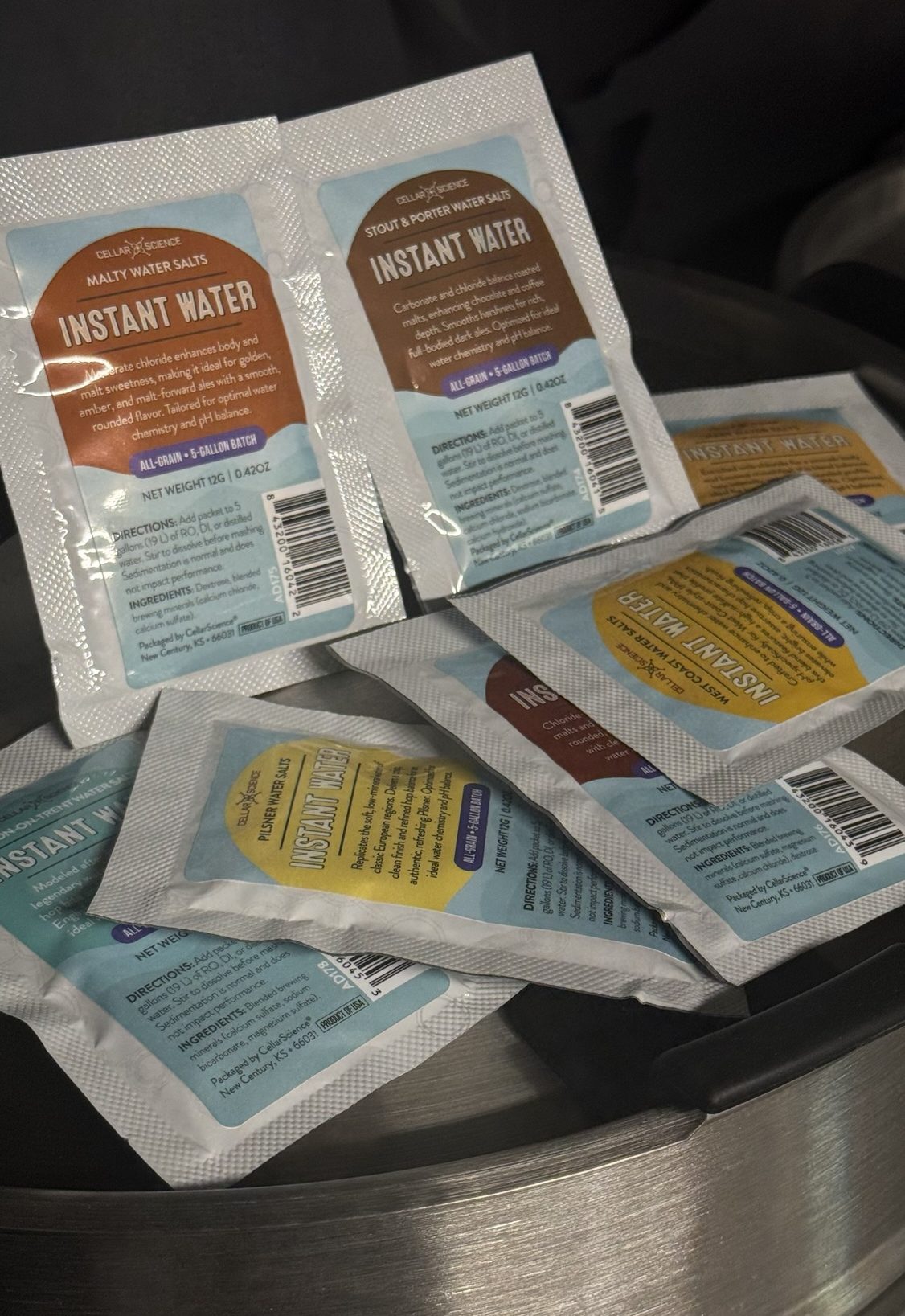
That’s what I think makes CellarScience’s new Instant Water packs so awesome.
Each packet is designed to go into RO, distilled, or distilled water before you mash in, giving you a consistent profile for a given style without needing to make any additional adjustments. CellarScience also worked with brewing author Colin Kaminski on the formulations, which adds some credibility if you’re familiar with his work. Sprinkle a packet in your water and brew like normal. No weighing salts, no calculators, nothing! MoreBeer offers a solid range of profiles depending on what you’re making. Hazy IPAs, West Coast IPAs, pilsners, malty beers, stouts, porters, pale ales, lagers, red ales, and even a Burton-on-Trent profile.
Most of us got into brewing because we want to make beer, not because we wanted to become amateur chemists. There are definitely brewers who love dialing in every mineral addition, and that’s great. There are also plenty of people who just want to brew a solid IPA without going full lab mode. I fall somewhere in the middle. I know enough to get by, and I’m fine with that.

The most interesting thing to me isn’t even the product itself. It’s what it says about where homebrewing is heading. Dry yeast is more reliable than it’s ever been. Recipe kits have gotten better. Equipment is more user-friendly across the board, and way cooler. Water chemistry has kind of just stayed that one area that still trips people up, especially newer brewers. Products like Instant Water seem aimed at closing that gap.
Will it replace actually learning water chemistry? Probably not. If you enjoy dialing in every detail, you’ll want the flexibility to build your own profiles. But if you’re curious and don’t know where to start, or you just want a clean repeatable process, the appeal is pretty clear. Anything that helps brewers make better beer with less friction is worth paying attention to. Water chemistry matters, but it can feel like a wall when you’re just getting started. If a pre-measured packet makes that first step easier, that seems like a good thing.
Check them out here!
By Jordan, Billy’s Tavern Homebrewing
Jordan is a California native. When he is not brewing he can be found drinking beer with friends, duck hunting, and getting lost in a good book or video game. When he is not out on an adventure with his wife, he can be found at home with his two lovable dogs. Stay up to date by following him on Instagram.

Check out more great content!

DDH Hazy Double IPA with Brouwerij Zoetwater
In my journey to brew the best New England-style IPAs, I’ve tweaked countless variables: adjusting the malt bill, water profile, dry hopping techniques, pH, and even changing hop suppliers. However, every time, I failed to create that ultra-soft, hop-saturated beer I was aiming for. There was always some sort of astringency (sometimes, but not always…


Opening Day: A Classic Kölsch Built For Hot Afternoons by Grounders Brewing
Opening Day — German KölschThis beer might be a little late for Opening Day, but its clean, crisp finish makes it great for any occasion. MCM Bavarian Pilsner malt is the backbone of this recipe, and is quickly becoming one of my favorite malts for lager-style beers. For this batch I also tried a new…

Why SafLager S-23 Deserves More Respect + A Recipe!
When it comes to dry lager yeast, most homebrewers immediately reach for one strain: W 34/70. It has become the gold standard for clean, crisp, reliable lager fermentation. Because of that, another strain from Fermentis often gets pushed to the side entirely: SafLager S-23. When I talk to other homebrewers about S-23, the response is…


Leave a Reply