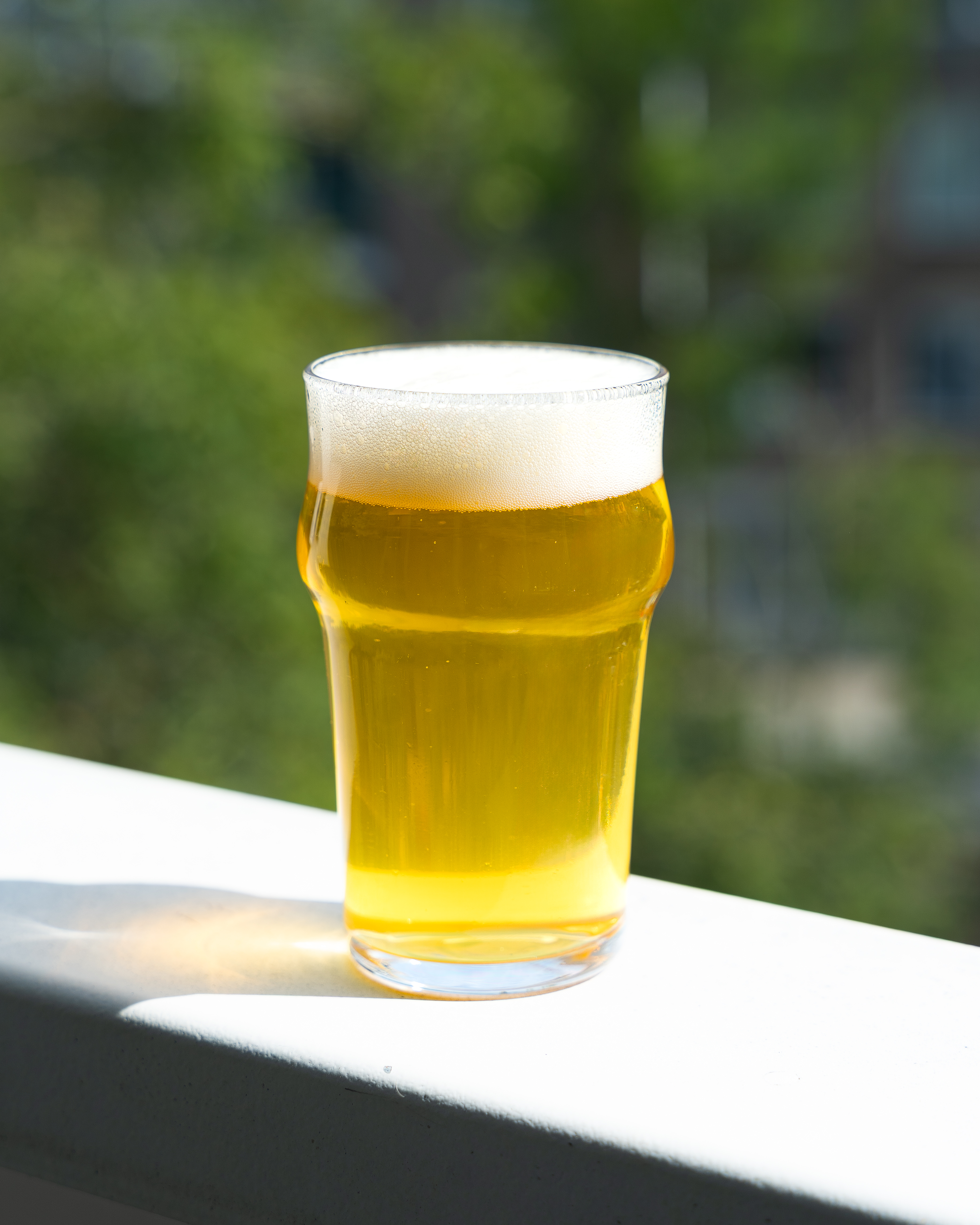

Recently, my personal taste has shifted toward crisper, more bitter beers rather than only juice-forward IPAs or cloying imperial stouts that I can only drink a little of (I still drink those by the way). About a year ago, I tried a West Coast IPA from the infamous English brewery Left Handed Giant. It was incredibly hop-forward yet crisp, finishing dry and drinking very easily despite having an ABV of around 7%.
What stunned me most was that it had notes of dank tropical fruit, blueberry, and pithy citrus, all while remaining highly crushable. I kept coming back for another sip—until, within minutes, the glass was empty! That beer was definitely the inspiration for me to start brewing modern-style West Coast IPAs: extremely hop-forward, crisp, fruity, piney, bitter, and lighter in malt character (yes, no caramel malts).
After reading articles, browsing recipes, and watching videos from West Coast breweries like Green Cheek, North Park, and Highland Park, I put together a recipe that really hits all the right notes. One trick I found especially interesting is tweaking the beer’s color just a bit by adding unmilled Carafa Special III near the end of the mash. By adding it only at mash-out, I can get the color I want without picking up any roasted flavors.
As for hops, feel free to experiment, but I like to mix dank, tropical varieties with piney, citrusy ones for a balanced and expressive result. And of course, it goes without saying: use your favorite Chico yeast strain for a clean fermentation profile. This beer should have no noticeable esters coming from the yeast. To avoid diacetyl production during hop creep, add ALDC before adding in the dry hops.

Recipe
Batch size: 6.87 Gal / 26L
Brewhouse efficiency: 77%
Original gravity: 1.062
Final gravity: 1.009
IBU: 50
Color: 5 SRM (10 EBC)
ABV: 7.0%
Mash
Temperature — 149 °F / 65 °C — 60 min
Temperature –– 169 ºF / 76 ºC –– 10 min
Malts (12.90 lbs / 5.85 kg)
12.13 lbs / 5.0 kg (86.6%) — Weyermann Extra Pale Premium Pilsner
0.77 lbs / 0.35 kg (5.5%) — Weyermann Carapils
1 oz / 28 g (0.43%) — Carafa Special III (unmilled) –– during mash out
Other
1.10 lbs / 0.5 kg — Dextrose
Hops (1.17 lbs / 531.8 g)
1.12 oz / 31.8 g (34 IBU) — CTZ 14.3% AA — Boil — 60 min
4.41 oz / 125 g (16 IBU) — Mosaic 13.2% AA — Aroma — 20 min hopstand @ 172 °F
5.29 oz / 150 g — Simcoe 12% AA — Dry Hop — 2 days
4.41 oz / 125 g — Mosaic 13.2% AA — Dry Hop — 2 days
3.53 oz / 100 g — Krush Cryo 21.8% AA — Dry Hop — 2 days
Yeast
2pkg — Lallemand BRY-97
For West Coast IPAs, Lallemand’s BRY-97 yeast is my go-to yeast strain as it produces a super clean profile with no noticeable esters. In addition to that, most of the time it completely ferments within 5 days. As I said, you can use your favorite Chico strain, as long as it ferments relatively clean as you want to let the hops shine in this beer.
Fermentation
Primary — 66 °F / 19 ºC — 4 days
Diacetyl Rest — 70 °F / 21 ºC — 2 days
Soft Crash — 50 °F / 10 ºC — 2 days (dump as much yeast as possible)
Dry Hop — 50 °F / 10 ºC — 1-2 days (rouse the hops every 12 hours)
Cold Crash — 39 °F / 4 ºC — 2-3 days
Conditioning –– 39 ºF / 4 ºC – 7


By Matt, Brouwerij Zoetwater
Check out some other great content!

Inside White Labs: Yeast Tour with Oil Creek Brewing!
Did you know White Labs has its own brewery along with its famed yeast propagation laboratory? White Labs is well known for its yeast. Since its early origins in California in 1995 but what you maybe didn’t know is that it has a very interesting approach to their brewery. I was fortunate enough to meet…


More Than Grain: Why Great Beer Starts with Montana’s Local Malt
In craft beer, people often talk about hops, yeast, and brewing techniques, but every great beer starts with malt. Over the last several years, Montana Craft Malt has built a reputation that goes beyond simply supplying grain. They have become a trusted partner for brewers who value quality, consistency, and a connection to where their…

CellarScience Instant Water: Simplifying One of Brewing’s Most Confusing Starting Points
Water chemistry is one of those things almost every homebrewer eventually gets told they need to learn. So you start reading about it, and before long you’re staring at water reports, sulfate and chloride ratios, mash pH targets, and calculators that make your head spin. At least that was my experience. Brewfather has helped a…
Leave a Reply