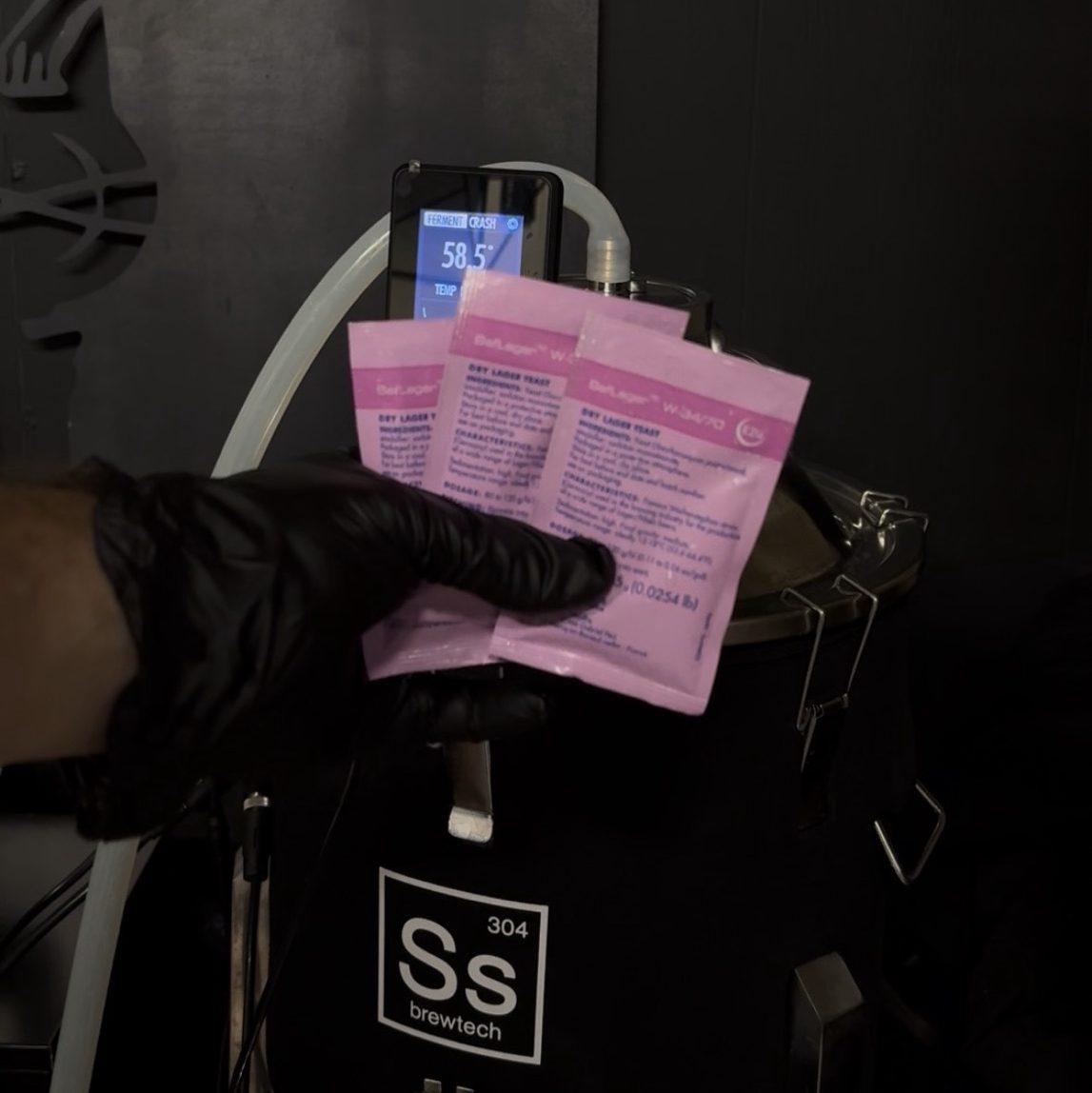

When it comes to brewing, yeast is not simply an ingredient. It is a living organism responsible for transforming wort into beer, shaping flavor, aroma, mouthfeel, and overall quality. Among the many factors that influence yeast performance, pitch rate stands out as one of the most important and often misunderstood.
Pitch rate refers to the number of viable yeast cells added to wort at the start of fermentation. In brewing science, it is typically expressed as millions of cells per milliliter per degree Plato. This measurement accounts for both wort volume and sugar concentration, providing a scalable and precise way to determine how much yeast is required.
Standard brewing guidelines suggest pitch rates for ales of approximately 0.75 to 1.0 million cells per milliliter per degree Plato. Lagers typically require about twice that amount, often around 1.5 million cells per milliliter per degree Plato or more depending on gravity and fermentation temperature. These ranges are derived from established brewing science and professional brewing practices.
Why Pitch Rate Matters
Proper pitch rates influence fermentation performance from the very beginning. When yeast is pitched at appropriate levels, it moves efficiently through the lag phase and into active fermentation. Underpitching forces yeast to reproduce excessively before fermentation can begin in earnest. This added stress can lead to the production of unwanted flavor compounds such as elevated esters, diacetyl, sulfur compounds, and fusel alcohols.
Overpitching can also create issues. While it often results in faster fermentation, it may suppress ester formation to the point of stripping character from certain styles. In extreme cases, it can impact yeast vitality for repitching and reduce overall flavor complexity.
Accurate pitch rates help ensure consistent attenuation, predictable fermentation timelines, and clean flavor profiles. For commercial breweries, this consistency is essential. For homebrewers, it is the difference between a good beer and a great one.
Why Lagers Demand Higher Pitch Rates
Lagers present a unique challenge. Fermented with Saccharomyces pastorianus at colder temperatures, typically between 45 and 55 degrees Fahrenheit, lager yeast metabolizes sugars more slowly than ale yeast. Lower temperatures reduce yeast growth rate and enzymatic activity. Because yeast reproduction is limited under these conditions, brewers compensate by pitching a higher initial cell count.
Industry guidance from White Labs and other yeast labs consistently recommends approximately 1.5 million cells per milliliter per degree Plato for standard lagers, with higher rates for strong lagers or especially clean styles. The goal is to minimize yeast stress, reduce the formation of off flavors, and ensure a steady, complete fermentation.
For brewers who value clean, refined lager profiles, proper pitch rate is not optional. It is foundational.
Dry Yeast Versus Liquid Yeast
The form of yeast used has practical implications for pitch rate management.
Dry yeast is produced with high cell counts and strong viability. Manufacturers typically package dry yeast with enough cells for standard gravity ales in moderate batch sizes. Because of its stability and density, dry yeast often does not require a starter when used within recommended parameters. Proper rehydration, as advised by the manufacturer, helps maximize viable cell recovery.
Check out this article: Dry Yeast Is Having a Moment and It’s About Time!

Liquid yeast, on the other hand, generally contains a fixed cell count at packaging, commonly around 100 billion cells. Viability declines gradually over time. This means that an older package may contain significantly fewer viable cells than when it was produced. For many five gallon batches, especially lagers or higher gravity beers, a single package of liquid yeast does not meet recommended pitching rates without propagation.
This is where yeast starters become essential.
The Role of Starters
A yeast starter is a small volume of wort prepared in advance of brew day to increase yeast cell count and vitality. By providing oxygen and nutrients in a controlled environment, the brewer encourages yeast reproduction before pitching into the main batch.
For lagers, starters are particularly important when using liquid yeast. Achieving 1.5 million cells per milliliter per degree Plato in a typical five gallon lager often requires significantly more cells than one package provides. A properly sized starter reduces lag time, improves attenuation, and promotes a cleaner fermentation profile.
Scientific brewing literature consistently shows that healthy, adequately pitched yeast reduces off flavor production and improves fermentation reliability. A starter is not simply about increasing numbers. It is about pitching active, metabolically prepared yeast into wort.

Using Software to Improve Accuracy
Modern brewing software has made pitch rate calculations far more accessible. Tools like Brewfather include built in yeast calculators that factor in batch size, original gravity, yeast type, age, and estimated viability. Instead of relying on guesswork or outdated rules of thumb, brewers can determine precise cell requirements and calculate appropriate starter sizes.
These tools bridge the gap between academic brewing science and practical homebrewing application. By quantifying pitch rates, they help ensure repeatability and reduce fermentation variability. For brewers who care about consistency, especially when dialing in lager profiles, this level of precision is invaluable.

Conclusion
Pitch rate is one of the most critical variables in brewing. It directly affects fermentation health, flavor development, and overall beer quality. While ales are relatively forgiving, lagers demand careful attention to cell count due to their colder fermentation temperatures and clean flavor expectations.
Understanding the differences between dry and liquid yeast, recognizing when a starter is necessary, and using reliable calculation tools can dramatically improve results. Brewing is both art and science, but when it comes to pitch rate, science provides clear guidance.
Healthy yeast, pitched at the right rate, is the foundation of great beer.
I also highly recommend checking out this book by Jack Hendler and Joe Connolly if you love lager brewing. Modern Lager Beer: Techniques, Processes, and Recipes
By Jordan, Billy’s Tavern Homebrewing
Jordan is a California native. When he is not brewing he can be found drinking beer with friends, duck hunting, and getting lost in a good book or video game. When he is not out on an adventure with his wife, he can be found at home with his two lovable dogs. Stay up to date by following him on Instagram.

Check out some more great content!

Inside White Labs: Yeast Tour with Oil Creek Brewing!
Did you know White Labs has its own brewery along with its famed yeast propagation laboratory? White Labs is well known for its yeast. Since its early origins in California in 1995 but what you maybe didn’t know is that it has a very interesting approach to their brewery. I was fortunate enough to meet…


More Than Grain: Why Great Beer Starts with Montana’s Local Malt
In craft beer, people often talk about hops, yeast, and brewing techniques, but every great beer starts with malt. Over the last several years, Montana Craft Malt has built a reputation that goes beyond simply supplying grain. They have become a trusted partner for brewers who value quality, consistency, and a connection to where their…

CellarScience Instant Water: Simplifying One of Brewing’s Most Confusing Starting Points
Water chemistry is one of those things almost every homebrewer eventually gets told they need to learn. So you start reading about it, and before long you’re staring at water reports, sulfate and chloride ratios, mash pH targets, and calculators that make your head spin. At least that was my experience. Brewfather has helped a…
Leave a Reply