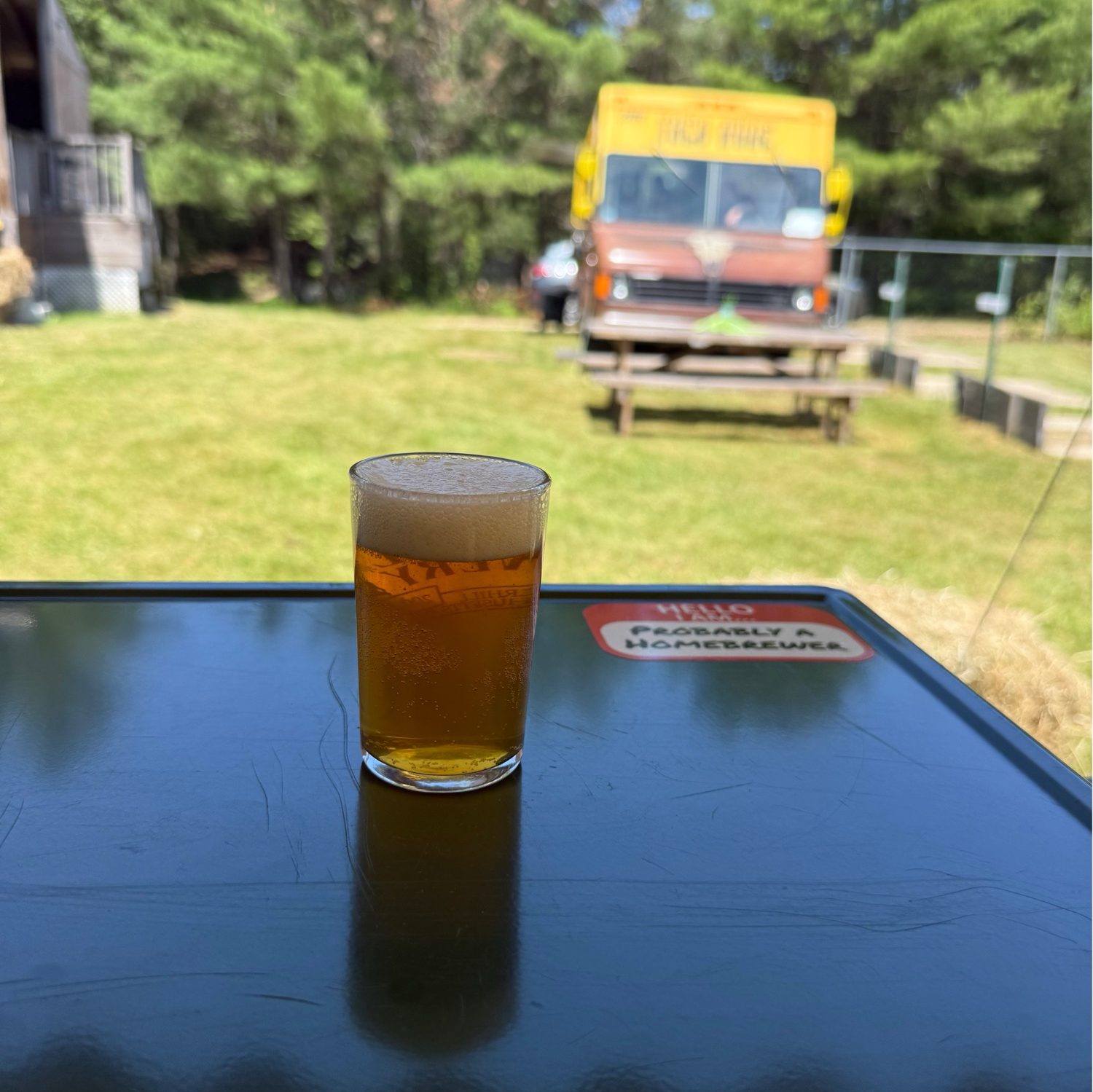


I’ve been working on improving my lager brewing skills, so I decided to tackle an amber lager for my latest project. Since the MOB has been collaborating with Montana Craft Malt and White Labs yeast, I thought this brew was a great opportunity to showcase both their malts and yeast.

The grain bill started with Montana Craft Malt’s Vienna Malt to bring more depth of flavor and color than a standard Pilsner base. I complemented it with their Melanoidin Gold and Cara Ruby malts. The Melanoidin was used to mimic the rich, toasty character you’d typically get from decoction mashing—which I haven’t incorporated into my process yet, but plan to soon. The Cara Ruby added subtle graham cracker and caramel notes, along with a touch more color.
For hops, I used Michigan-grown Centennial and Cascade from the Hop Alliance. Centennial was added as a first wort hop to contribute both bitterness and a more pronounced hop aroma. Cascade went in with 15 minutes left in the boil to layer in additional aromatic character.
For fermentation, I chose White Labs WLP840 American Lager yeast. I like this strain for its clean profile and minimal sulfur and diacetyl production. I fermented the beer at 50°F for 10 days, then ramped it up 2 degrees over five days to reach 60°F for a diacetyl rest, holding there for another five days. After that, I slowly brought the temperature down to 34°F and lagered it for a couple of weeks before kegging. It is conditioned in the keg for a month before serving.

I brewed this beer for the Southern Vermont Homebrew Festival in Bennington, VT—a fantastic event that brings together homebrewers from across New England and New York. Last year, I took home first place in the pro-judged category, and this year I placed second with a brett saison aged in a peach brandy barrel.

I also brought this beer to the Snow Club’s Summer Brew Festival in Winchendon, MA. It was my first time attending the event, and while it was smaller than some of the other festivals I’ve been to, it was still a fantastic experience. The more intimate setting made it a great opportunity to connect with fellow brewers and share my beer with a new crowd.

Lets dive into the recipe!
Recipe
70% efficiency
Batch Volume: 6 gal
Boil Time: 60 min
Boil Volume: 9.87gal
Pre-Boil Gravity: 1.040
Original Gravity: 1.046
Final Gravity: 1.010
IBU (Tinseth): 25
Color: 6 SRM
Mash
Mash — 148 °F — 60 min
Mash Out — 168 °F — 10 min
Mash Notes: Simple infusion mash for use with most modern well modified grains (about 95% of the time). Uses infusion for first step and direct heat to reach the mash out temp.
Malt
8 lb 8oz (77.3%) — MCM Vienna Malt
1 lb (9.1%) — MCM Melanoidin Gold
1 lb (9.1%) — MCM Munich Malt
8 oz (4.5%) — MCM Cara Ruby
Hops
0.50 oz (19 IBUs) Centennial — 60 min
0.50 oz (5.7 IBUs) Cascade — 15 min
Yeast
1pkg American Lager Yeast WLP840

If you have any questions, feel free to reach out on my Instagram or my email!
Mike, Marshall Mash Brew Lab

Subscribe for free and be entered to win yeast every month!
You can also use code “MashMag” to save 5% off your order when buying homebrew size pouches at Yeastman!

Check out some more great content!

A Place Between Seasons: Brewing with Kernza by Billy’s Tavern
After trying Pure Project’s Kernza lager and Deschutes’ Kernza lager, I’d been wanting to brew one myself for a while. This is a clean, crushable lager built around a grain most people have never heard of. I got the Kernza from a friend at work who started homebrewing. He hasn’t had the time to brew,…


Inside White Labs: Yeast Tour with Oil Creek Brewing!
Did you know White Labs has its own brewery along with its famed yeast propagation laboratory? White Labs is well known for its yeast. Since its early origins in California in 1995 but what you maybe didn’t know is that it has a very interesting approach to their brewery. I was fortunate enough to meet…

More Than Grain: Why Great Beer Starts with Montana’s Local Malt
In craft beer, people often talk about hops, yeast, and brewing techniques, but every great beer starts with malt. Over the last several years, Montana Craft Malt has built a reputation that goes beyond simply supplying grain. They have become a trusted partner for brewers who value quality, consistency, and a connection to where their…

Leave a Reply